REAR WHEEL ALIGNMENT
1. MAKE FOLLOWING CHECKS AND CORRECT ANY PROBLEMS
(a) Check the tires for wear and proper inflation.
Cold tire inflation pressure:
Tire Front Rear
225/60 HR 14 1.9 (27,186) 1.9 (27,186)
kg/cm² (psi, kPa)
(b) Check the rear wheel bearings for looseness.
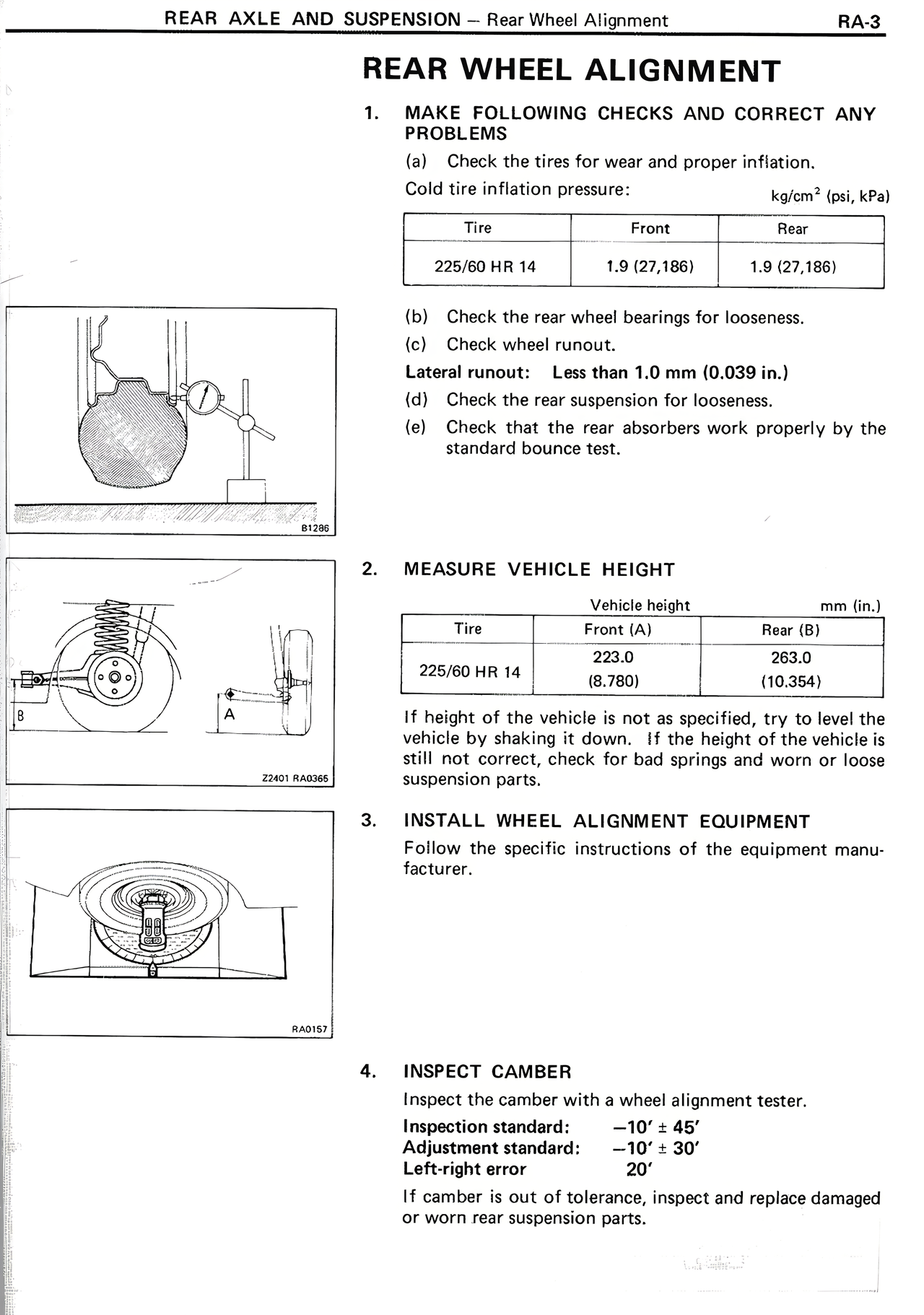
(c) Check wheel runout.
Lateral runout: Less than 1.0 mm (0.039 in.)
(d) Check the rear suspension for looseness.
(e) Check that the rear absorbers work properly by the standard bounce test.
2. MEASURE VEHICLE HEIGHT
Vehicle height mm (in.)
Tire Front (A) Rear (B)
225/60 HR 14 223.0 263.0
(8.780) (10.354)
If height of the vehicle is not as specified, try to level the vehicle by shaking it down. If the height of the vehicle is still not correct, check for bad springs and worn or loose suspension parts.
3. INSTALL WHEEL ALIGNMENT EQUIPMENT
Follow the specific instructions of the equipment manufacturer.
4. INSPECT CAMBER
Inspect the camber with a wheel alignment tester.
Inspection standard: -10' ± 45'
Adjustment standard: -10' ± 30'
Left-right error 20'
If camber is out of tolerance, inspect and replace damaged or worn rear suspension parts.