2 HEAT METHOD: When the problem seems to occur when the suspect area is heated
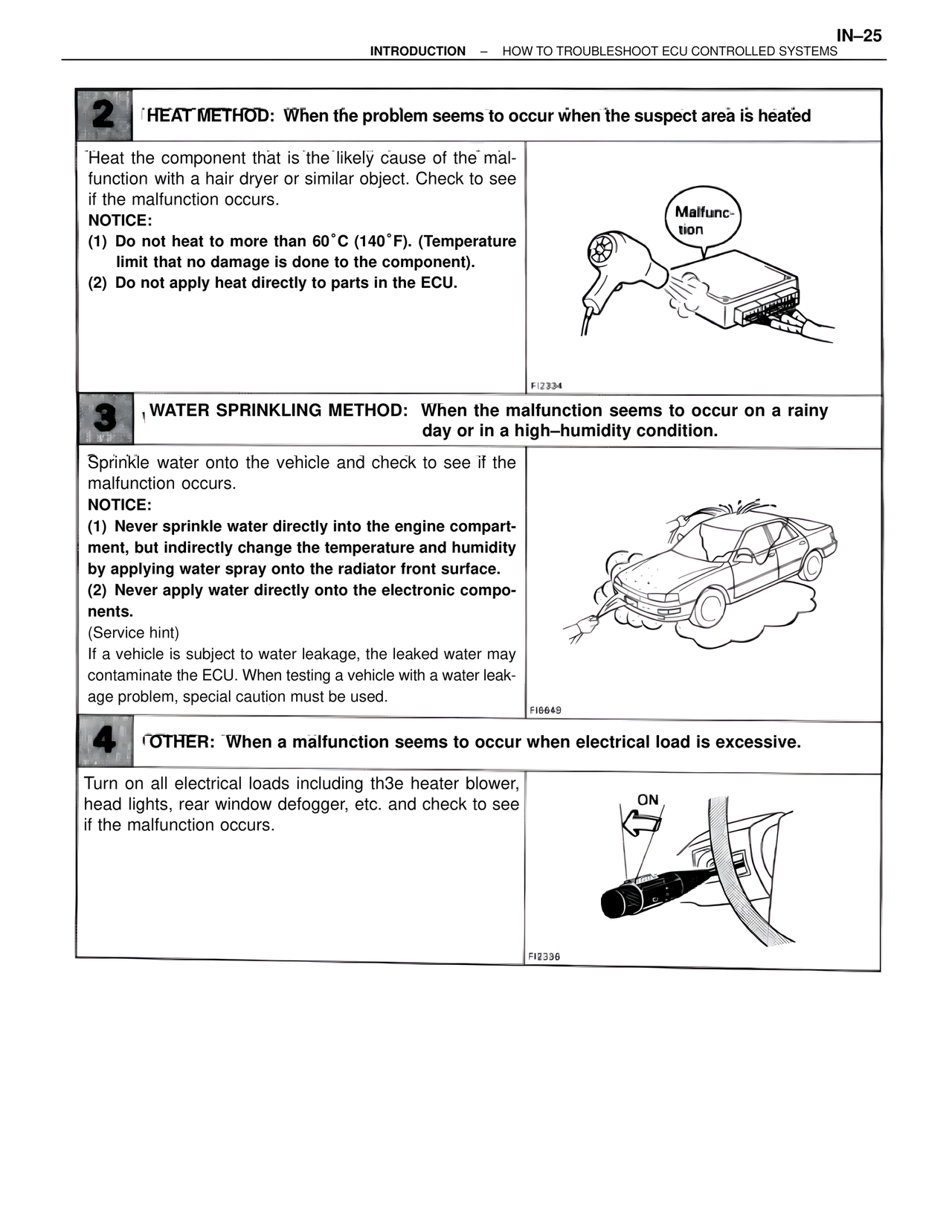
Heat the component that is the likely cause of the mal-
function with a hair dryer or similar object. Check to see
if the malfunction occurs.
NOTICE:
(1) Do not heat to more than 60°C (140°F). (Temperature
limit that no damage is done to the component).
(2) Do not apply heat directly to parts in the ECU.
Malfunction
FI2334
3 WATER SPRINKLING METHOD: When the malfunction seems to occur on a rainy
day or in a high–humidity condition.
Sprinkle water onto the vehicle and check to see if the
malfunction occurs.
NOTICE:
(1) Never sprinkle water directly into the engine compart-
ment, but indirectly change the temperature and humidity
by applying water spray onto the radiator front surface.
(2) Never apply water directly onto the electronic compo-
nents.
(Service hint)
If a vehicle is subject to water leakage, the leaked water may
contaminate the ECU. When testing a vehicle with a water leak-
age problem, special caution must be used.
FI6648
4 OTHER: When a malfunction seems to occur when electrical load is excessive.
Turn on all electrical loads including th3e heater blower,
head lights, rear window defogger, etc. and check to see
if the malfunction occurs.
ON
FI2336